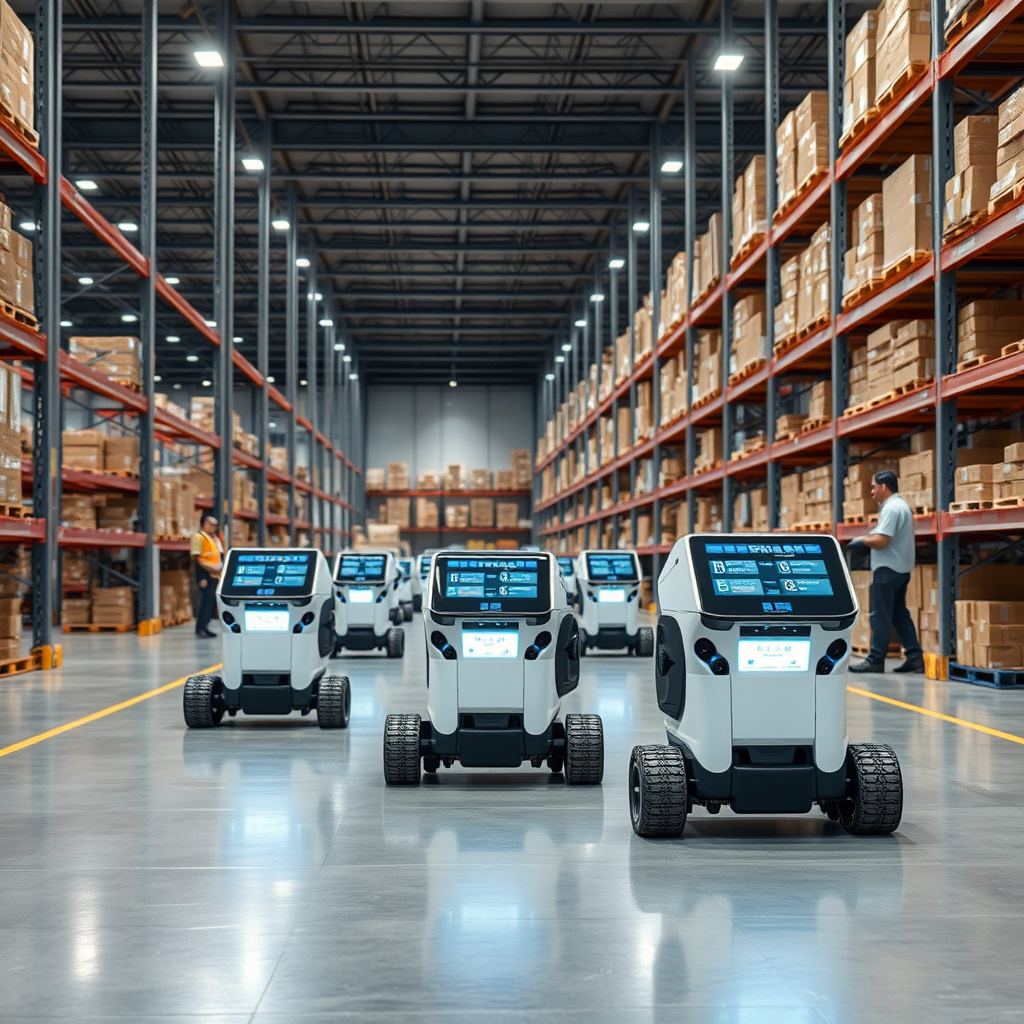
Introduction to Autonomous Mobile Robots in Logistics
The logistics and supply chain management sector has witnessed significant transformations in recent years, driven by technological advancements and the need for enhanced efficiency. One of the most promising developments in this area is the integration of Autonomous Mobile Robots (AMRs) into warehouse operations. These robots are designed to navigate through facilities autonomously, performing tasks such as material transport, inventory management, and order fulfillment with high precision and speed.
How AMRs Work
AMRs utilize a combination of sensors, artificial intelligence, and machine learning algorithms to understand their environment and make decisions in real-time. This enables them to avoid obstacles, adapt to changing conditions, and optimize their routes for maximum efficiency. Unlike traditional automated guided vehicles (AGVs), which follow predetermined paths, AMRs offer the flexibility and intelligence to operate in dynamic environments, making them highly suitable for complex warehouse settings.
Benefits of Implementing AMRs in Warehouses
The adoption of AMRs in logistics and supply chain management offers several key benefits:
- **Enhanced Efficiency**: By automating repetitive and labor-intensive tasks, AMRs can significantly increase the throughput of warehouse operations, leading to faster order fulfillment and improved customer satisfaction.
- **Increased Accuracy**: AMRs can perform tasks with a high degree of accuracy, reducing the likelihood of errors in inventory management, picking, and packing processes.
- **Flexibility and Scalability**: AMRs can be easily integrated into existing warehouse infrastructure and can adapt to changes in demand or operational requirements, making them a scalable solution for businesses of all sizes.
- **Safety**: By reducing the need for human intervention in hazardous areas or tasks, AMRs can contribute to a safer working environment for warehouse personnel.
Challenges and Future Directions
While AMRs hold tremendous potential for revolutionizing warehouse operations, several challenges need to be addressed to ensure their widespread adoption. These include:
- **Integration with Existing Systems**: Seamless integration with current warehouse management systems (WMS), enterprise resource planning (ERP) systems, and other automation technologies is crucial for maximizing the benefits of AMRs.
- **Cybersecurity**: As with any connected device, ensuring the cybersecurity of AMRs to prevent data breaches and maintain operational integrity is essential.
- **Regulatory Compliance**: Businesses must comply with relevant regulations and standards regarding the use of autonomous systems in industrial settings.
Overcoming Challenges and Embracing Innovation
To overcome these challenges, logistics and supply chain management companies should focus on developing comprehensive strategies for AMR integration, including thorough risk assessments, employee training programs, and continuous monitoring and evaluation of AMR performance. Collaborating with technology providers and industry peers can also facilitate the sharing of best practices and accelerate the development of standards and guidelines for AMR deployment.
Conclusion
The integration of Autonomous Mobile Robots into warehouse operations represents a significant step forward in the quest for efficiency, accuracy, and innovation in logistics and supply chain management. As technology continues to evolve and address current challenges, the potential for AMRs to transform the sector is vast. By embracing this innovation, businesses can position themselves at the forefront of a revolution that promises to redefine the future of warehouse operations and beyond.
CodnestX perspective
Technology follows the process.
Whether the solution becomes an internal platform, workflow automation, AI assistant, data dashboard, or integration layer, the first step is always the same: understand the business process deeply enough to design the right system around it.
Related services